
How to Wash Reusable Pads: 4 Steps, About 45 Seconds a Pad
Ask anyone who hasn’t tried cloth pads what stops them, and washing comes up before leaks or price. It sounds messy. What it actually involves is a cold tap and the laundry you were going to run anyway, roughly 45 seconds of hands-on time per pad.
Below is the routine first. After it come the questions that show up in week one: stains, smells, drying, travel, and what stays out of the machine.
The 4-step routine
- Rinse in cold water. About 30 seconds under a cold tap, squeezing a few times, until the water runs mostly clear. Hot water would set the blood, so keep it cold.
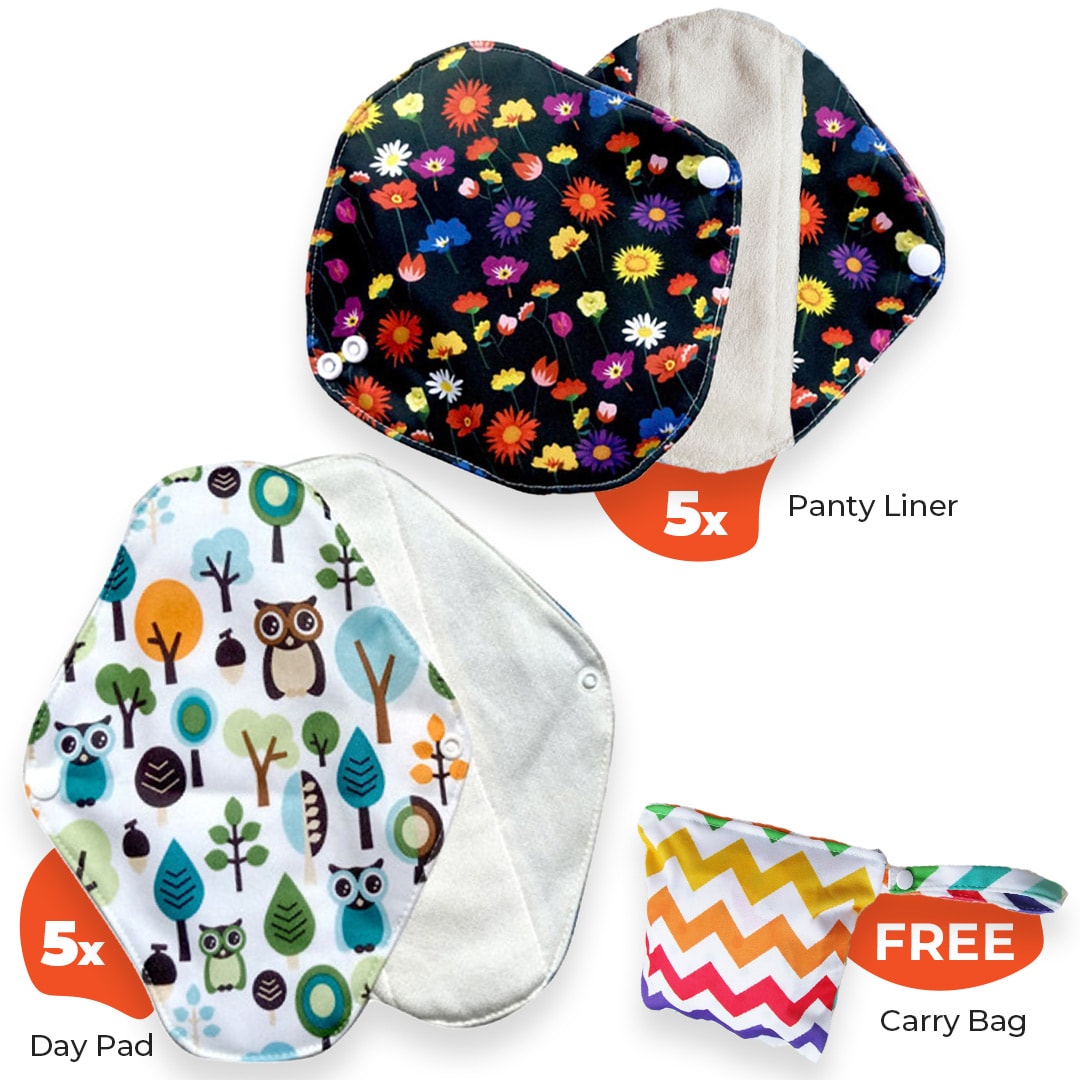
- Keep it in a wet bag until laundry day. Fold the pad, snap it shut, and drop it in a wet bag or a bowl. When you’re out, the carry bag that comes with most of our sets does this job.
- Wash with your normal laundry. Normal cycle, usual detergent. Towels or underwear in similar colors can share the load.
- Air dry, or tumble dry on low. A few hours on a rack, or about as long as a towel in the dryer.
No soaking, no scrubbing, and nothing extra to buy.
Why cold first, then a normal wash
Blood is mostly protein. Warm it up while it’s still in the fabric and it bonds to the fibers, which is how a stain becomes permanent. Rinsing cold first clears most of it out, and after that your machine’s usual temperature does no harm.
What to leave out
- Fabric softener and dryer sheets, which coat the fibers so the pad soaks up less.
- Bleach. Chlorine weakens fabric over time.
- Oxygen brighteners and hydrogen peroxide: the same damage, just slower.
- Overnight soaking. Hours in standing water is how pads start to smell, and the rinse already does what a soak would.
Your regular detergent is enough. A fragrance-free one is nice if you prefer it, not required.
How often should you wash them?
Every two or three days suits most people. A pad that’s had its cold rinse sits happily in a wet bag for that long. Much longer, in a warm bathroom, and you’ll notice it.
Your wash rhythm also sets how many pads to own. Take a heavy day’s worth, double it for two days, then add a spare or two to cover the batch still drying. With a heavy flow, that tends to land at 10 to 12 pads. Our guide to using reusable cloth pads has more on building a set.
Stains
Nearly every stubborn stain traces back to a missed rinse or hot water too early. Catch it cold, straight after use, and most of it lifts.
Some pads keep a faint shadow anyway. It has no effect on how they work. Sunlight fades those marks over a few hours, though it fades the prints as well, so keep that trick for the occasional one.
Pads that hide stains
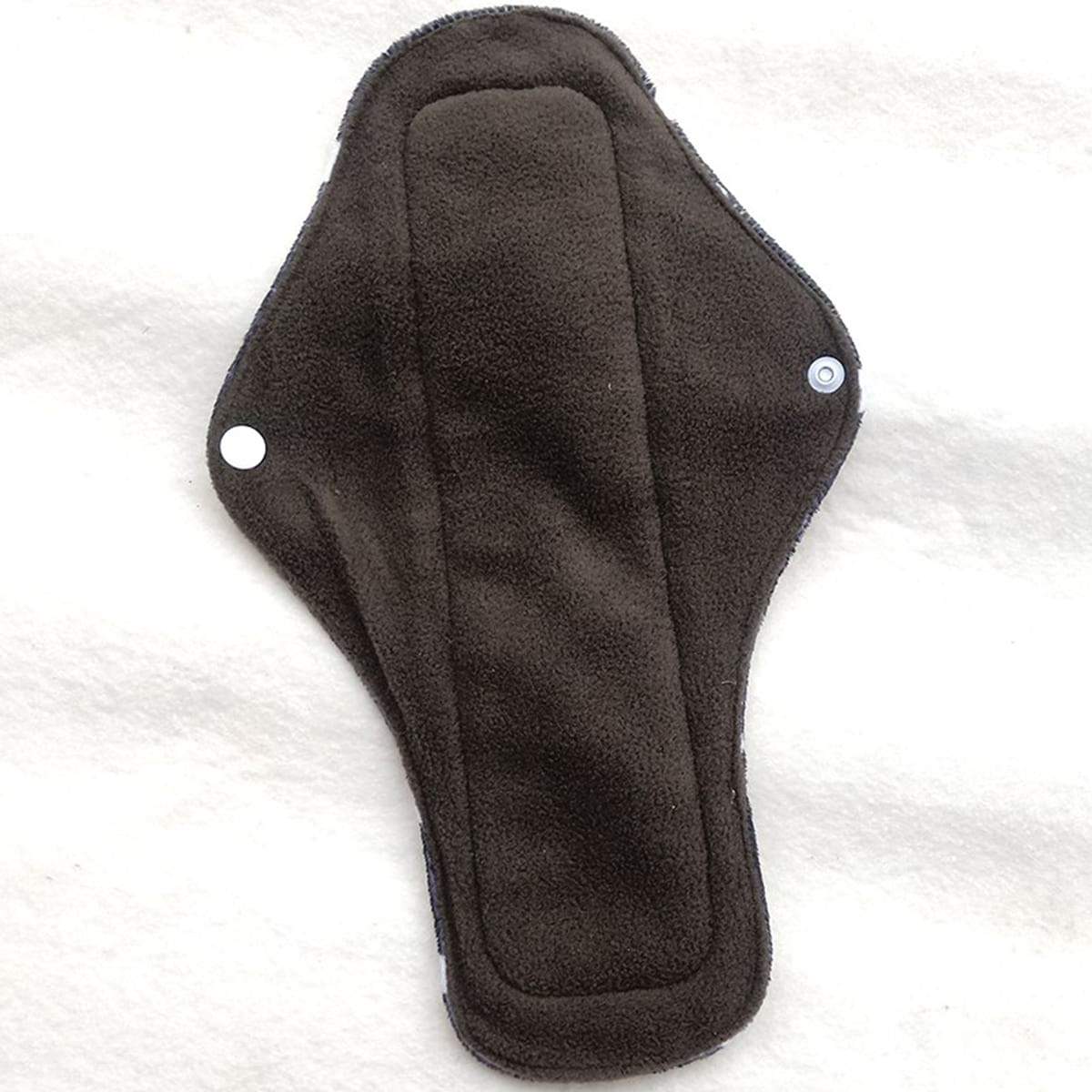
Would you rather not see marks at all? Our Super Pad and Extended Liners have a charcoal absorbent side, so whatever the wash leaves behind stays out of sight.
Smells
Fresh from the wash, a pad should smell of nothing at all. When one doesn’t, something in the routine slipped. Usually it’s a skipped rinse, a wet bag left too long, or softener building up. Most cases clear with a splash of white vinegar in the wash cycle.
For anything more stubborn, including the ammonia smell that comes with bladder leaks, our guide to getting smell out of reusable pads goes step by step.
Washing by hand
On a trip with no machine, a sink works. Rinse the pad cold, rub a little soap or detergent into the absorbent side, and rinse again until the water runs clear. Squeeze, roll it inside a towel to pull more water out, then hang it up.
That gets you through a few days. Give them a proper machine wash once you’re home.
Drying
Flat on a rack or pegged on a line, pads take a few hours, a bit more in a steamy bathroom. For everyday drying, shade keeps the colors bright.
Low heat in the dryer is fine. High heat is hard on the waterproof backing, so leave that setting for towels.
One habit worth keeping: only put them away bone dry. Damp pads in a closed drawer are a smell waiting to happen.
Bladder leak pads
Pads you wear for bladder leaks follow the same routine. The one thing to be quick about is the cold rinse, since urine left to sit is where an ammonia smell starts. Then wet bag, normal wash.
How long they last
Looked after like this, our pads last 5 years or more. Each one has a bamboo terry top layer, a polyester core and a waterproof PUL backing, and a normal wash suits all three. Bleach, softener and high heat are what shorten that.
Washing FAQ
Can you put reusable pads in the washing machine?
Yes. Rinse them in cold water first, then wash them on a normal cycle with your usual detergent and the rest of your laundry.
What temperature should I wash reusable pads at?
Rinse in cold water. After that, your normal wash temperature is fine. The cold rinse is the part that keeps stains from setting.
Do I need to soak reusable pads?
No. The cold rinse straight after use covers it, and long soaks, overnight especially, are a common cause of smell.
How do you get period blood out of reusable pads?
Cold water, as soon as you can. Rinse until the water runs mostly clear, then wash as normal. A faint mark that stays won’t affect how the pad works.
Can I wash reusable pads with other clothes?
Yes. Once they’re rinsed, they go in with towels or underwear of similar colors.
Are reusable pads sanitary?
Rinsed, then machine washed with detergent, they come out as clean as the rest of your laundry. Just let them dry fully before they go in a drawer.
How long do reusable pads take to dry?
A few hours on a line or rack. On low in the dryer, about as long as a towel.
What should I not use on reusable pads?
Fabric softener, dryer sheets, bleach, oxygen brighteners and hydrogen peroxide. The first two coat the fibers; the rest weaken them.